
Hope and Prayer
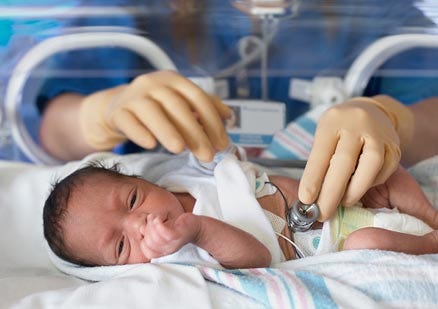
My nephew and his wife are in crisis - their son was born ten weeks ago with a serious heart defect. He prays for God’s help. I awkwardly express my hope while acknowledging his faith in God.

Same goal, different approach.
As the author of The MINDVERSE Hypothesis, ideas about God, Creation, Reality and Mind which arose from my own crisis period decades ago, I am acutely aware of the difference between my genuine metaphysical beliefs and those of others who place their faith in God.
Yesterday, I was tempted to say that I will pray for the best outcome, but my beliefs are known and my promise to pray would be perceived as disingenuous. Instead, I expressed hope and trust in the infant’s surgeons and medical team.
I awoke this morning still feeling the awkwardness of yesterday’s call from my nephew. I turned to ChatGPT to shed some perspective on the source and legitimacy of my awkward feelings which I have encountered may times in the past under similar circumstances. I genuinely acknowledge that some people, like my own mother, derive strength and solace from their faith in God. I am not one of them, yet I sincerely “pray” in my own way for a long and healthy life for their son.
ChatGPT offered the following.
Prayer, Secular Analogues, and Bias: A Balanced Explanation
This document looks at prayer from two angles: as something that can help people psychologically, and as something many believers experience as a real spiritual relationship. It then compares prayer with secular practices that meet some of the same human needs.
1. Is Prayer a Ritualized Expression of Hope?
Yes, but that is only part of the picture. Prayer often expresses hope, but for many believers it also means much more than hoping for a better outcome.
From a psychological point of view, prayer can help people:
express wishes for a better outcome
cope with uncertainty and suffering
reduce anxiety by placing concerns into a larger framework
maintain optimism when circumstances appear beyond their control
From a religious point of view, prayer can also include:
Petition – asking for help or healing.
Thanksgiving – expressing gratitude regardless of circumstances.
Confession – acknowledging mistakes and seeking forgiveness.
Praise or worship – honoring God without requesting anything.
Contemplation – quietly seeking awareness of the divine rather than asking for change.
Communion – cultivating an ongoing relationship with God.
Many traditions also see prayer as something that changes the person praying, helping cultivate resilience, humility, compassion, or acceptance.
A broader way to put it would be:
Prayer is a ritualized way of expressing hope, gratitude, sorrow, reverence, or dependence while seeking connection with a higher reality. Depending on one’s worldview, it may be seen as psychological self-regulation, spiritual communion, or both.
2. Do Atheists Have Practices That Serve Similar Purposes?
Yes. If we focus on the functions prayer can serve—offering hope, calm, resilience, gratitude, and moral reflection—then many atheist practices serve similar purposes without involving belief in God.
Function of prayer Common secular equivalent
Expressing hope Optimistic reflection, setting intentions
Seeking guidance Journaling, ethical reasoning, discussing with trusted friends
Finding calm Mindfulness meditation, breathing exercises
Processing grief Letter writing, remembrance rituals, therapy
Expressing gratitude Gratitude journals, thanking people directly
Building community Humanist gatherings, civic ceremonies, volunteer work
Accepting what cannot be controlled Stoic reflection, mindfulness, cognitive behavioral techniques
Meditation versus prayer
Many atheists practice meditation, but usually without treating it as communication with anything supernatural.
Prayer often involves addressing God or another divine being.
Secular meditation typically focuses on awareness, attention, emotional regulation, or compassion without assuming any deity is listening.
Both practices can reduce stress and support well-being; they begin from different assumptions.
Humanist “Prayer”
Some nonreligious people also create prayer-like rituals. They might:
reflect quietly each morning
express gratitude
reaffirm personal values
remember deceased loved ones
commit themselves to helping others
For them, these practices are usually about reflection, values, or remembrance rather than communication with God.
Hope without Prayer
Atheists can still value hope, but they usually locate it in human effort, community, uncertainty, and resilience rather than divine providence.
An Important Distinction
The main difference is meaning. Secular practices may serve some of the same purposes as prayer, but believers often see prayer as a relationship with God, while atheists usually understand similar practices in natural terms.
3. Where Bias Could Enter the Analysis
To keep the discussion balanced, it helps to separate three things: the psychology of prayer, what believers say prayer means to them, and bigger claims about whether God exists or responds.
A neutral explanation should keep these points in view:
Prayer can have psychological functions such as hope, coping, gratitude, and emotional regulation.
Many believers understand prayer as genuine communication with God.
Atheist practices can meet similar human needs without being identical to prayer.
Potential Sources of Bias
One possible bias is reductionism: describing prayer only as coping and leaving out the believer’s view that God may hear and respond.
The opposite bias is to state as fact that prayer is communication with God, since that depends on religious belief rather than shared evidence.
Conclusion: Keeping the Categories Separate
So the goal is not to settle whether God exists or whether prayer “works” supernaturally, but to be clear about what kind of claim is being made.
Empirical claims (e.g., prayer is associated with certain psychological outcomes in some studies).
Descriptive claims (e.g., many Christians believe prayer is communication with God).
Metaphysical claims (e.g., God hears and answers prayer), which cannot be established or refuted by scientific methods alone.
Keeping these categories separate makes the discussion fairer and clearer.
In short, prayer can be understood as a human practice with psychological effects and, for believers, as a relationship with the divine. Secular practices can overlap with prayer in function without sharing the same meaning.
Gene, best wishes for your nephew and his family in this stressful time.
We have free will. From your Mother and her faith, to the son of the nephew, to you. IMO, your wishes for the child to heal is heartfelt. It is done in your way, to your beliefs ! I do not see that as any less of an act of faith which myself and others believe in. We all make our choices. These are what shapes our lives.
I really DO believe that I can and do communicate with our creator. I do not know why, but I always seemed to know He/She was there and I would have ongoing discussions with God as a young child over what I should become as an adult. I laugh about it now; about how cute my faith was and I acknowledge even as an adult, my faith is probably still quite juvenile. I have long ago given up telling God what he should do for me and how to run the world, though I do at times still wish he would act on my suggestions. It can be hard for me to say I'LL PRAY FOR YOU to people in need. It can seem a bit haughty to say that, depending of course what faith tradition if any that person may practise. As if I have a special in with God, that that person does not. I think your response to your nephew was very kind and given in love. I think that is really all that is required. I do hope for the best for your great- nephew. I can't think of anything more difficult than having a child ill and struggling no matter what age.